Introduction
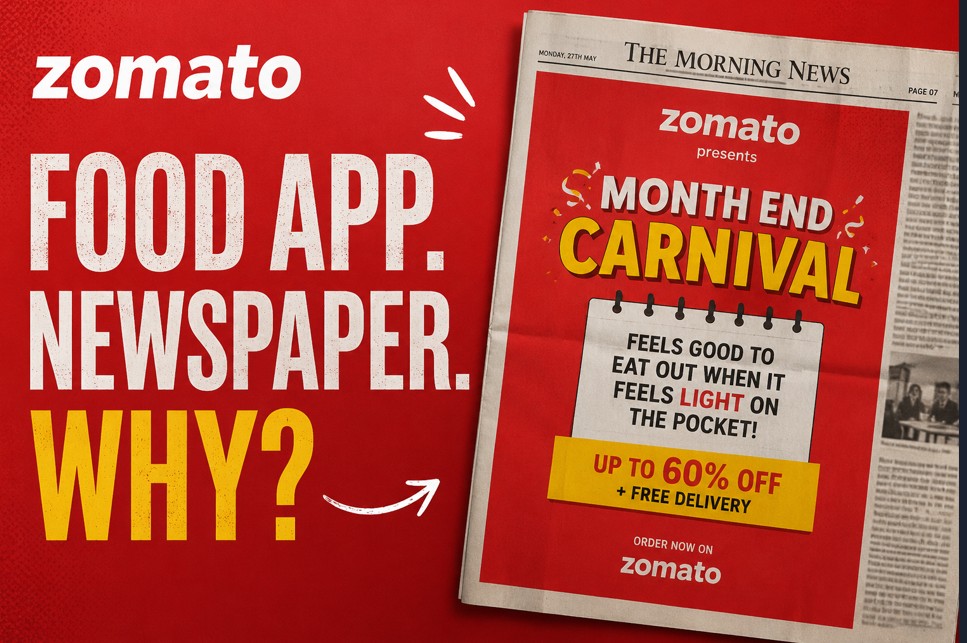
Zomato Print Advertising might seem surprising for a brand that lives almost entirely on your smartphone. Yet, its Month End Carnival campaign shows why choosing the right moment can be more powerful than choosing the newest medium. Instead of relying only on app notifications or social media, Zomato used full-page newspaper advertisements to tap into a familiar consumer emotion: the month-end budget crunch. It’s a simple campaign on the surface, but underneath lies one of marketing’s most valuable lessons about understanding consumer behaviour.
Marketing Lesson: Why Zomato Print Advertising Worked?
The biggest lesson from Zomato Print Advertising isn’t the newspaper itself. It’s how the brand used consumer insight.
At first glance, this looks like another discount campaign. After all, almost every food delivery platform offers deals. So what made this one different?
The answer lies in consumer insight.
Every month follows a predictable pattern. Salaries get credited, spending increases, and by the last week, many people become noticeably more careful with their money. Zomato didn’t create this behaviour. It simply recognised it and built its communication around it.
Let’s be honest. Most of us have checked our bank balance at month-end and quietly decided that cooking at home suddenly sounds like a brilliant idea.
That’s exactly the moment Zomato wanted to interrupt.
The interesting part is that the campaign wasn’t just about discounts. It was about timing. A discount offered at the beginning of the month doesn’t feel the same as one offered when consumers are actively looking to save money. That’s what transforms an ordinary promotion into relevant communication.
Even more interesting is the choice of print advertising. For a food delivery app, newspapers may seem like an old medium. But media planning isn’t always about choosing the newest platform. It’s about choosing the right context. Morning newspapers are often read while people plan their day, think about expenses and make purchase decisions. In that environment, the message feels natural rather than intrusive.
From a marketing perspective, this campaign is also a neat example of the STP Framework. Instead of targeting people based on age or income, Zomato targeted a temporary consumer mindset: being budget-conscious at the end of the month. Great segmentation isn’t always demographic. Sometimes it’s behavioural.
We’ve seen similar thinking in campaigns like Cadbury Celebrations, which leverages festive gifting behaviour, and Surf Excel’s Holi campaigns, which connect with cultural moments instead of simply promoting detergent. Great brands understand that relevance often matters more than reach.
Think Like a Marketer
If Zomato had run the exact same newspaper advertisement during the first week of the month, would it have generated the same response?
Or was the real creative idea not the advertisement itself, but the timing behind it?
How to Use This in Placement Interviews
Zomato Print Advertising is a great example of consumer insight combined with contextual marketing.
Typical Interview Question
“Can you give an example of a brand that used consumer insight effectively in advertising?”
How You Can Answer
A good example is Zomato’s Month End Carnival Print Advertising campaign. Instead of focusing only on discounts, Zomato recognised that consumers naturally become more price-conscious toward the end of the month. It aligned its communication with this behavioural insight and even chose newspapers as a contextual medium. The campaign demonstrates that successful marketing begins with understanding consumer behaviour, not just creating attractive offers.
Bonus Interview Tip
Always start with the marketing concept before discussing the campaign.
Instead of saying “Zomato launched a newspaper advertisement…”
Say:
“This campaign is a great example of consumer insight and contextual marketing. Zomato recognised a predictable spending behaviour and built its communication around it.”
Interviewers remember structured thinking far more than campaign details.
Final Takeaway
Great advertising doesn’t create consumer behaviour. It recognises consumer behaviour and meets people at exactly the right moment.

Professor of Marketing at Jaipuria Institute of Management, Lucknow. Ph.D. in Marketing, IIM Lucknow. Ex-assistant Prof at IIM Ranchi, visiting faculty to IIM Lucknow. Writes for ET BrandEquity, Campaign India, BusinessWorld, Times of India etc.