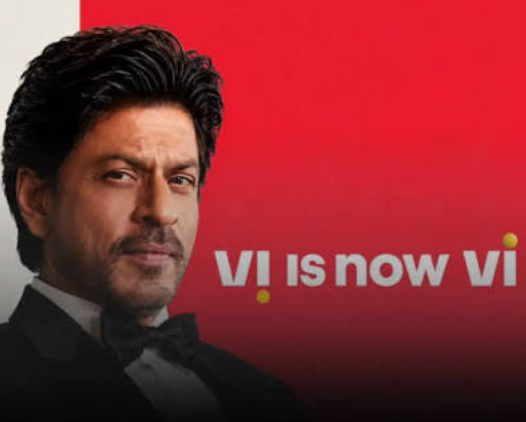
A brand repositioning strategy usually begins with proof, but Vi’s has begun with a promise: Vi badal raha hai, tayaar rahiye, which means “Vi is changing, get ready”. In September 2026, Vodafone Idea moved from a V! logo to a cleaner Vi and named Shah Rukh Khan its brand ambassador, as Business Standard reported. That is a bold order of events: promise first, proof later.
Last updated: September 2026
The first phase was a deliberate teaser. The yellow particle in the logo became a 3D sphere above the i, and Vi said on its own blog that the campaign was designed to leave customers curious, while existing plans and prices stayed the same. On September 10 came the second phase, a film titled Vi Pe Sab Hai VIP, conceptualised by Ogilvy and produced by Chrome Films, rolling out across television, digital and outdoor, according to BestMediaInfo. In it, Shah Rukh Khan plays a star who assumes each new upgrade was made especially for him, until he realises the benefits are meant for every customer, as Adgully described.
What Vi’s Repositioning Strategy Is Really Teaching
Vi is not a new brand introducing itself. The Vodafone and Idea consumer brands coexisted for two years after the 2018 merger, until September 2020. Today, as another BestMediaInfo piece put it, Vi is rebuilding relevance in one of India’s most competitive consumer markets.
Brand repositioning is one of the seven positioning strategies, the one brands reach for when relevance fades. Positioning is the space a brand holds in the customer’s mind, so a repositioning strategy has to move that space. It needs three things: a new promise, enough attention to carry it, and proof that it is true. Vi’s campaign so far covers the first two. A new logo and a superstar can change how a brand looks and how much people notice it. They cannot change what people believe about the network. That belief moves only when experience moves. The trade analysis frames Vi’s task the same way: turning network investment and early signs of stabilisation into consumer belief that the company has genuinely changed. Positioning is the last step of the STP model.
There is an early sign to watch. Business Standard reported that Vi added 240,114 customers in July, its highest monthly gain in two years. That is encouraging, though one month is not a repositioning. A classic classroom version of this dilemma is the RIN detergent position or reposition case
Notice the sequence. The teaser builds curiosity. The film gives the promise a shape: Vi’s chief marketing officer, Avneesh Khosla, said the message is that at Vi, everyone matters, which turns the idea of VIP treatment into something for all customers. Only the network and the offers can supply the proof. The trade press has even asked whether Shah Rukh Khan will become as tied to Vi as the pug and the ZooZoos were to Vodafone, and noted that the answer depends on what the brand does next.
When I teach repositioning, I ask students a blunt question: what would a customer have to see, not hear, to believe this? For Vi, my answer would be coverage, speed and offers they can actually use.
Think Like a Marketer
- Is a teaser a smart way to build curiosity, or does it promise more than the brand can deliver?
- What evidence would a customer need before believing a telecom brand has really changed?
- Does “everyone is a VIP” position Vi as premium, or as fair?
How to Use Repositioning Strategy in Placement Interviews
Likely question: A struggling brand has changed its logo and signed a celebrity. Has it repositioned?
How to answer: Say not yet. Separate identity change, which is visible, from positioning change, which lives in the customer’s mind. Explain that a repositioning strategy needs a new promise and proof that the promise is true. Then say you would track perception, subscriber additions and churn.
Bonus tip: Describe the sequence of attention, claim and proof, and say which stage a campaign has reached.
Final Takeaway
A repositioning strategy can announce a new position, but only the customer’s experience can confirm it.

Professor of Marketing at Jaipuria Institute of Management, Lucknow. Ph.D. in Marketing, IIM Lucknow. Ex-assistant Prof at IIM Ranchi, visiting faculty to IIM Lucknow. Writes for ET BrandEquity, Campaign India, BusinessWorld, Times of India etc.