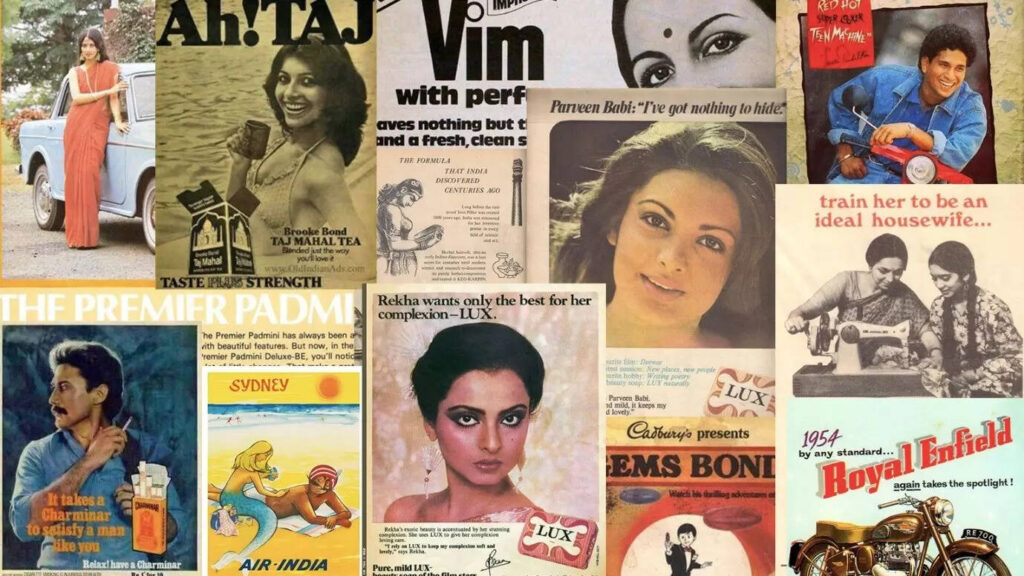
Every few years, someone declares print advertising in India dead. The data tells a more interesting story: not dead, not thriving, but quietly holding a defensible position while everything around it changes.
Print Advertising in India: The Actual Numbers
According to the Pitch Madison Advertising Report (PMAR) 2026, print media advertising in India reached ₹20,866 crore in 2025, up 3% from ₹20,272 crore in 2024. That’s genuine, if modest, growth — not the freefall the “print is dying” narrative implies.
What has changed is print’s share of the overall advertising pie, not its absolute size. Print’s share of total AdEx has steadily declined: from 30% in 2019, to 22% in 2020-2021, to 21% in 2022-2023, to 19% in 2024, and 18% in 2025. Print isn’t shrinking so much as being outpaced — the rest of the market is simply growing faster around it.
For context on that overall market: India’s total advertising expenditure is projected to reach roughly ₹1,74,605 crore in 2026, a 12-13% increase over 2025, according to the same PMAR report. Digital alone is projected to reach around ₹1,11,976 crore in 2026, cementing its position as the primary growth engine — while Print is forecast to edge up only about 3%, in what the report describes as a “low-growth, yield-management phase” for traditional media generally.
What TAM AdEx’s 2026 Data Shows About Where Print Still Works
TAM AdEx’s most recent sector analysis (January-July 2026) adds useful texture to the story. A few things stand out:
- Total print ad space contracted just 2% year-on-year in this period — a genuinely modest decline, not a collapse
- Education remains the single largest sector advertising in print, at 20% market share, followed by Services (15%), Auto (14%), and Banking/Finance/Investment (11%)
- Cars overtook Education-related “Multiple Courses” ads to become the single most-advertised category in print, at 9% share
- Hindi and English publications together account for more than 60% of all print ad volume, with Hindi actually leading at 37% share — a reminder that print advertising in India remains substantially a regional-language and Hindi-belt medium, not primarily an English, metro phenomenon
Why Print Advertising in India Still Makes Sense for Certain Categories
The sector data above isn’t random — it reflects genuine strategic logic:
Trust and permanence. Categories like education, real estate, and finance involve high-stakes, considered decisions. A newspaper ad for a coaching institute or a property listing carries an implicit credibility that a scrollable Instagram ad doesn’t — this is likely why Education has held its position as the top print advertising sector for years running.
Regional and vernacular reach. Print remains one of the most effective ways to reach audiences in Hindi and regional languages at scale, particularly outside major metros, where digital penetration and ad-targeting infrastructure are comparatively weaker.
Category habit. Auto and real estate buyers have historically used newspapers to browse comparisons methodically — a use case not fully replaced by digital browsing behavior, even now.
The Key Takeaway
Print advertising in India isn’t the growth story it was a decade ago, and its share of the overall pie will likely keep shrinking as digital continues to expand faster. But “declining share” and “dying medium” are different claims — the actual spend numbers show a channel that’s found a stable, if smaller, role: trusted, considered-purchase categories, and language markets where it still reaches audiences digital hasn’t fully captured.
When I discuss media planning with my students, this is a useful real-world case for a broader point: a channel doesn’t need to be the fastest-growing option to remain a rational part of a media mix — it needs to be the right fit for a specific audience and message.

Professor of Marketing at Jaipuria Institute of Management, Lucknow. Ph.D. in Marketing, IIM Lucknow. Ex-assistant Prof at IIM Ranchi, visiting faculty to IIM Lucknow. Writes for ET BrandEquity, Campaign India, BusinessWorld, Times of India etc.