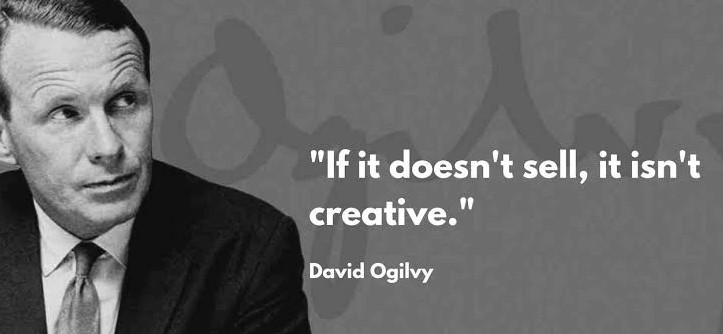
Most ads today try very hard to be clever. Very few try to sell. This is exactly what the idea “if it doesn’t sell it isn’t creative” highlights.
Scroll through any platform and you will see visually impressive campaigns, witty lines, and high production value. But ask a simple question. Do they actually make you buy anything?
If you are interested in how memorable lines shape recall, you can also explore our collection of Indian advertisement slogans in Hindi.
Decades ago, in his book Ogilvy on Advertising, the man often called the godfather of advertising, David Ogilvy, put it simply:
“If it doesn’t sell, it isn’t creative.”
It sounds obvious. Yet most advertising today ignores this completely.
About the Book: Ogilvy on Advertising
Ogilvy on Advertising is not a typical marketing textbook. It is a collection of practical insights, real campaign thinking, and lessons from decades of experience in advertising.
Instead of focusing on theory, the book explains what actually works in real campaigns. That is why the ideas still feel relevant today.
Why Most Ads Ignore “If It Doesn’t Sell, It Isn’t Creative”
A lot of ads today are designed for attention rather than results.
They aim for:
- Awards
- Social media likes
- Creative appreciation
Not for actual business impact.
This is where most campaigns fail. They are remembered for being interesting but not for what they were selling.
If people remember the joke but forget the brand, the ad has already failed.
Lesson 1: Why “If It Doesn’t Sell It Isn’t Creative” Still Matters
Ogilvy was very clear about one thing.
Advertising has one job. Sell the product.
Not entertain. Not impress. Not confuse.
Example
Think of many viral ads today. They trend for a few days, people share them, but rarely connect them to the brand.
Now compare that with Fevicol ads.
They are funny, but the message is always clear.
Strong bonding.
You remember the humor, but more importantly, you remember what the product does.
Lesson 2: Clarity Beats Cleverness
One recurring idea in Ogilvy on Advertising is that the best ads are easy to understand.
Not layered. Not abstract. Not requiring interpretation.
Example
Surf Excel’s “Daag Achhe Hain”
The idea is simple. Stains are not bad if they come from doing something meaningful.
No complicated storytelling. No heavy explanation.
Just a clear message that connects instantly.
You will notice that many of the most effective lines follow this same simplicity. You can see more such examples in our list of famous Indian advertisement taglines.
Lesson 3: The Big Idea Matters
Ogilvy emphasized the importance of a strong central idea.
Without it, even large budgets do not help.
A weak idea with great execution is still a weak ad.
Example
Cadbury’s “Kuch Meetha Ho Jaaye”
This was not just a tagline. It changed behavior.
Chocolate was no longer just a snack. It became part of celebrations.
That is what a big idea does. It changes how people think.
Some campaigns go beyond taglines and completely change how brands are perceived. You can explore such campaigns in memorable Indian advertisements.
Lesson 4: Research Before Creativity
This is often ignored.
Ogilvy relied heavily on research and consumer understanding.
The more you understand people, the better your ads perform.
This idea appears repeatedly in Ogilvy on Advertising.
Reality Check
Many campaigns today are built on trends rather than insight.
That is why they disappear quickly.
Lesson 5: Consistency Builds Brands
One great ad does not build a brand.
Repeated messaging does.
Example
Amul has been consistent for decades.
Same tone. Same style. Same approach.
They did not try to reinvent themselves every time. They built memory through repetition.
Where Most Ads Go Wrong
If you look closely, most ads fail because they:
- Try to say too many things
- Focus more on style than substance
- Prioritize creativity over clarity
- Ignore long-term consistency
And most importantly, they forget to sell.
What This Means for Students and Marketers
If you are studying marketing or working on campaigns, this is worth remembering:
- A creative idea is not enough
- A funny ad is not enough
- A viral campaign is not enough
If it does not lead to business impact, it is incomplete.
Or in Ogilvy’s words:
“If it doesn’t sell, it isn’t creative.”
This also connects closely with models like AIDA, where attention alone is not enough without action.
Conclusion
Great advertising is not about being the smartest person in the room.
It is about being clear, consistent, and effective.
The ideas from Ogilvy on Advertising still work because they are simple and practical.
Most ads fail because they ignore these basics.
The ones that succeed usually do not.

Professor of Marketing at Jaipuria Institute of Management, Lucknow. Ph.D. in Marketing, IIM Lucknow. Ex-assistant Prof at IIM Ranchi, visiting faculty to IIM Lucknow. Writes for ET BrandEquity, Campaign India, BusinessWorld, Times of India etc.